For a screwdriver blister-pack quotation, require every dimension entry to identify its packaging level, unit and measurement reference. Tuoye Tools’ TY001 blister listing contains a set-size line and a separate carton MEAS line. Keep those entries separate until the supplier confirms which physical pack each describes. A retail blister, the tool itself and a master carton are different objects; a size copied without its label cannot reliably describe the packing proposal under review.
Start with the exact blister presentation
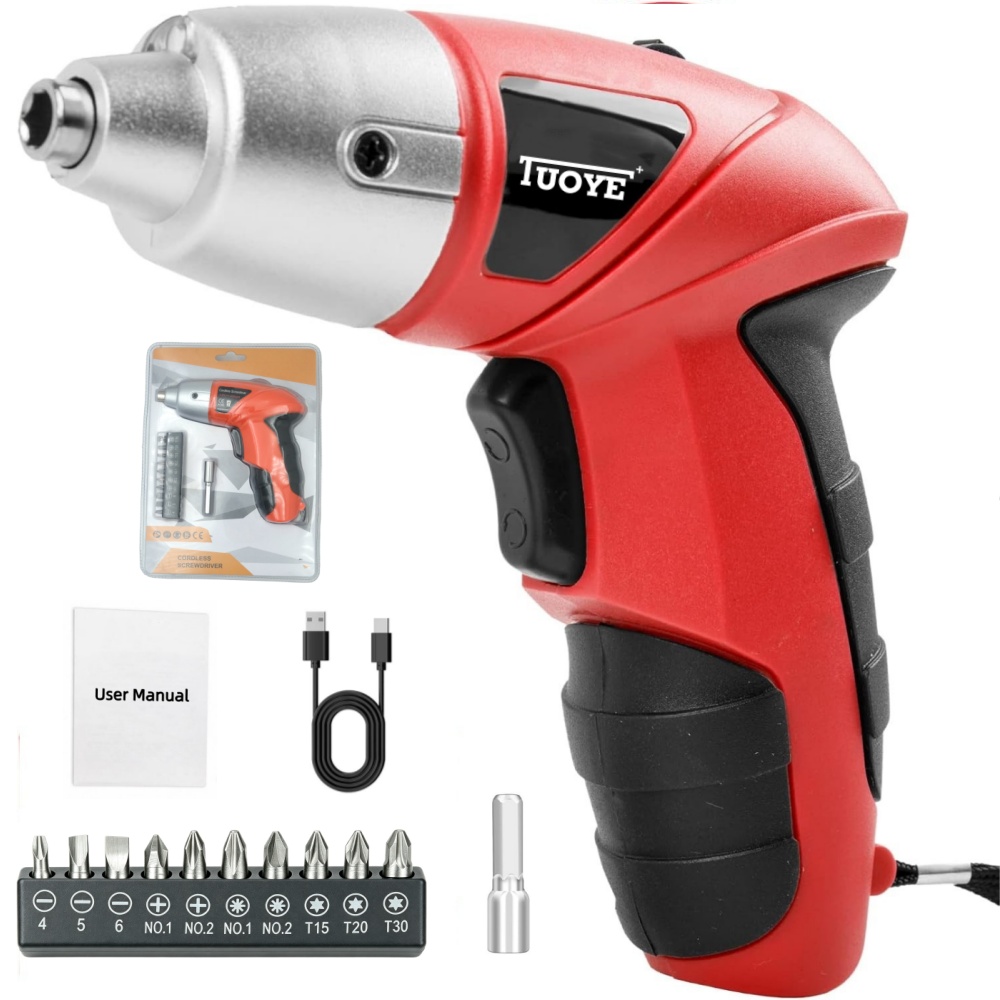
Attach the TY001 blister product link to the enquiry and identify the presentation shown in the official reference. The model name alone is insufficient when the same tool family is listed with other packaging. Ask the supplier to identify the blister version being quoted and the carton reference associated with that version.
Keep a catalogue size as a source entry awaiting confirmation rather than treating it as an independently measured shipment specification. The buyer’s immediate task is to determine what was measured. This avoids using a tool-body dimension where a shelf-pack footprint was intended, or using a carton measurement where the retailer requested the individual pack.
Separate the objects described by the size lines
The linked listing describes a PVC blister set and separately gives carton information. Ask the supplier to return those references on separate lines. If an individual pack sits within another sleeve, tray or container in the actual offer, request identification of that additional level instead of assuming the catalogue shows every packing component.
Name the measurement object before the numbers. A useful answer identifies the individual packed set, the shipping carton and any other offered level, then states the corresponding dimensions. Do not convert an unlabeled entry into a retail-pack size simply because it appears beside the product title. The measurement reference should remain attached to the supplier’s own description.
Measurement object | Clarification to request | Record with the quotation
Tool body | Does this entry describe the tool without its packaging? | Model and measurement object
Individual blister set | Does the size include the complete outer retail pack? | Pack reference and external or other stated basis
Additional packing level | Is any sleeve, tray or inner container offered? | Actual component and its own size entry
Master carton | Which packed version belongs in this carton? | Carton reference, dimensions and unit
Unclear catalogue entry | What physical object and direction does it describe? | Supplier’s corrected label before comparison
Define dimension directions without inventing tolerances
Ask the supplier to identify the direction of each reported dimension. Where a buyer needs a specific shelf or storage orientation, supply an annotated reference showing the intended faces. A sequence of three numbers does not explain which side becomes the displayed width or which dimension includes a projecting part of the pack.
Request the stated unit and whether the measurements refer to external dimensions or another explicitly named basis. Any required allowance or acceptance range needs separate agreement for the actual packaging proposal. Do not add a tolerance, infer an internal clearance or promise that a particular fixture will accommodate the pack from the catalogue entry alone.
Keep quantities and weights beside their packing level
A carton size is more useful when its packed contents are identified. Ask the supplier to connect the carton entry to the quoted retail presentation and its confirmed packing quantity. Keep this quantity separate from the kit’s advertised piece count. One describes packed sets in a shipping unit; the other describes items within an offered set.
The same labelling discipline applies to weight. Ask what the reported weight includes and whether a line refers to an individual packed set or a carton. Where gross and net terms appear, obtain the supplier’s explanation for that offer. Do not subtract values to reconstruct an unconfirmed packaging weight or assume that another version uses the same carton.
• Identify the physical packaging level on every size line.
• Keep dimension directions and units explicit.
• Connect carton measurements to the quoted packed-set version.
• Treat quantities and weights as separately labelled references.
Compare quotations using the same measurement question
When comparing alternative packing proposals, first check that their entries describe the same level. A compact retail pack and a larger shipping carton cannot be compared as though both numbers describe the same object. Request the missing measurement from the supplier rather than ranking two differently labelled entries by size alone.
Keep commercial and transport calculations conditional on the supplier-confirmed packing information and the relevant service quotation. A catalogue carton line does not establish a freight price, a loading quantity or a delivered cost. This clarification defines the proposed package measurements; it does not verify transport arrangements, stock availability or a delivery schedule.
Send a packaging-level clarification request
An enquiry can read: Please confirm the packaging dimensions for the linked TY001 blister offer. Identify the individual outer blister pack separately from the master carton. State each measurement unit, the direction sequence and the measurement basis. Connect the carton entry to the quoted retail-pack version and its confirmed packing quantity, with weights separately identified.
Retain the returned labels with the quotation reference. If the supplier proposes a different blister or carton, request replacement entries for the affected levels. This creates a usable dimensional record without turning a catalogue illustration into a measured acceptance result or making an unsupported promise about fit, freight cost or packing performance.
Frequently asked questions
Can the set-size line be used as the carton size?
Confirm its measurement object first. Keep the individual blister and master-carton entries on separate labelled lines.
Does MEAS identify the displayed width of the retail pack?
Ask the supplier which object and directions the entry describes rather than assigning a retail orientation to it.
Should carton quantity be treated as the kit piece count?
No. Record packed sets per carton separately from the components counted within a set.
Does a catalogue size prove the pack fits a specific fixture?
Obtain the confirmed pack measurement basis and any agreed acceptance requirements before approving that use.
Product and contact references
Product reference: https://tuoyetools.com/product/cordless-screwdriver-14pcs-blister-ty001/
Related tools and sets: https://tuoyetools.com/products/
Contact Tuoye Tools: https://tuoyetools.com/contact/
Tuoye Tools blog: https://tuoyetools.com/blog/